Slow-dried pasta up to 60 hours: what it is and why it matters
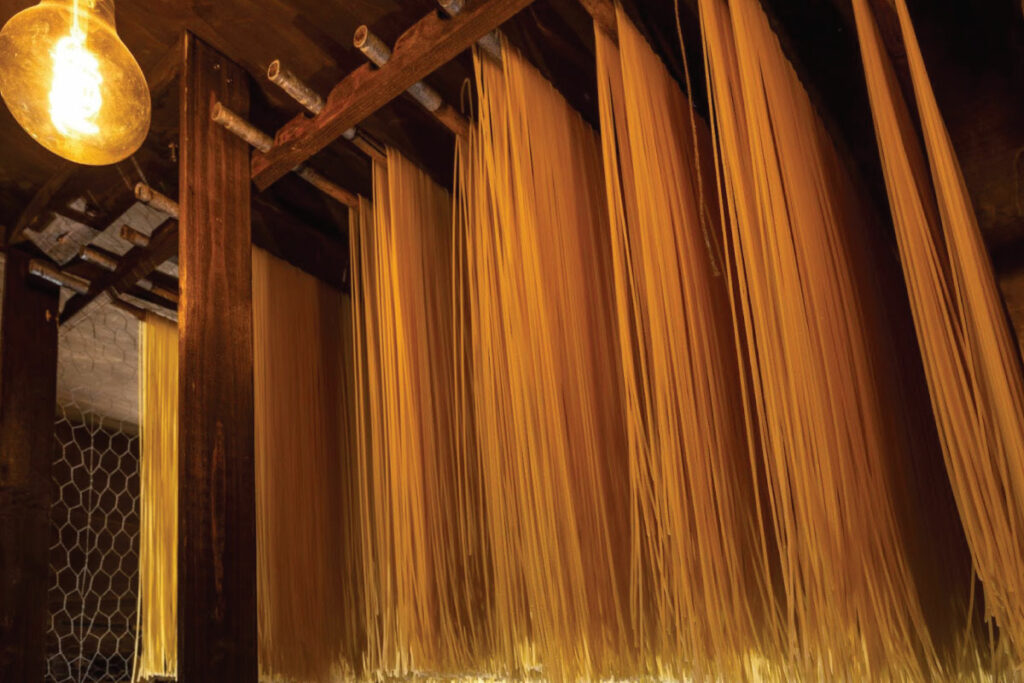
Some things simply need time to be done well. This is the case with slow drying, a key step in the pasta-making process that can take up to 60 hours. This controlled phase helps define the final product’s qualities — from color and flavor to cooking performance and firmness.
Time that shapes pasta
Slow drying at low temperature takes place in dedicated drying chambers, where each pasta shape follows a gradual path. Long pasta is hung on rods, recalling the old tradition of drying on bamboo canes along the streets; short pasta is instead laid on wooden frames. Each shape follows its own “recipe”: time, airflow, and resting phases are carefully controlled so that air circulates evenly around the product.
In this process, theexperience of pasta makers is essential to ensure balance and consistency at every stage.
Why slow drying makes the difference
Slow drying at low temperature helps avoid unwanted reactions caused by excessive heat, preserving nutritional value and the integrity of proteins. The color remains light golden, bright and natural, reflecting the purity of the semolina.
Choosing this method means producing high-quality pasta that maintains its structure, flavor, and identity on the plate.
Sixty hours may seem like a long time, but it is the time needed for every detail to reach its balance.

Gragnano: a tradition that continues
Today, the process takes place in controlled environments, but its origins remain deeply rooted in Gragnano and its landscape. Between the sea and the mountains, the constant meeting of air, humidity, and mild temperatures has naturally supported a slow and balanced production for centuries.
This same approach still guides modern technology, which has brought greater precision and consistency without changing the core idea: every transformation needs its own time to happen properly.


